
Web Development Company Near Me: How to Choose Right
Looking for a web development company near me? Learn how to compare local agencies with remote studios on cost, speed and communication before you sign.
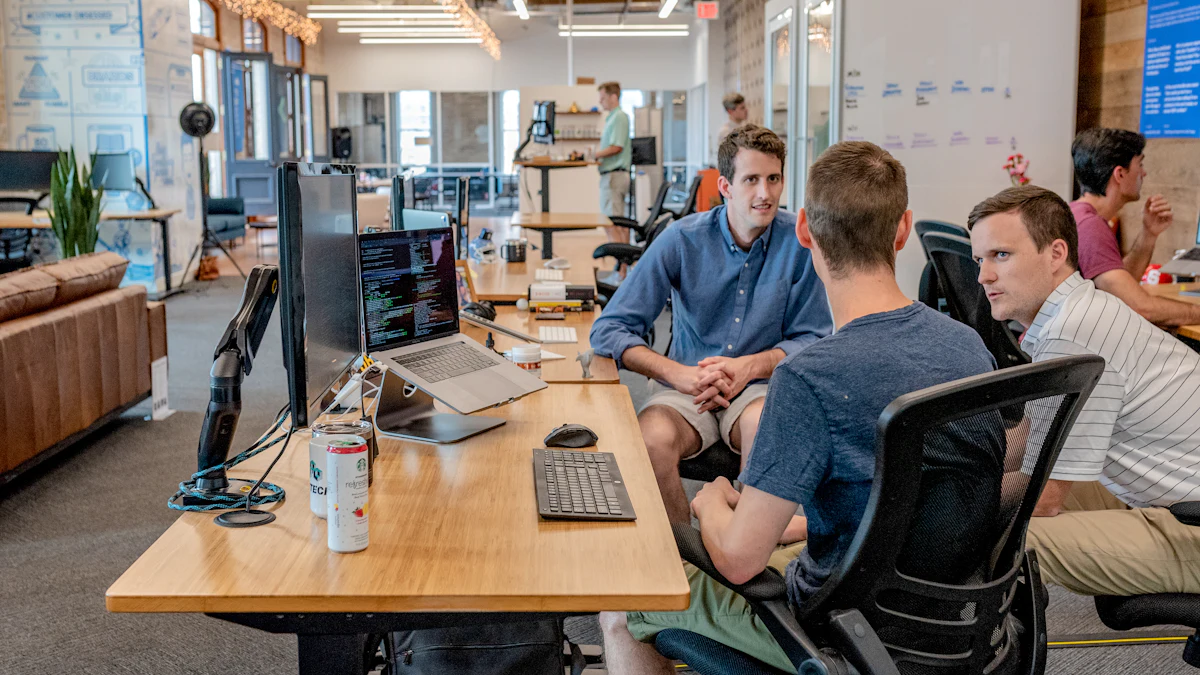
When you search for a web development company near me, you usually want three things: someone who replies quickly, someone who understands your business, and someone you can hold accountable if the project slips. Proximity feels like a shortcut to all three, but it is not the only way to get them. A remote studio with a clear process and a named contact can beat a local agency that takes three days to answer an email.
This guide explains what "near me" should really mean, how to compare local and remote options, and the questions that separate a reliable partner from a cheap quote that costs more later. If you already know what you need built, you can also see how we scope web and mobile projects.
What "near me" really means when you search for a web development company
Google shows local results because it thinks you want a physical address. What you actually want is low friction. That breaks down into four practical things:
- Response time. How long until a real person answers a question?
- Overlap hours. Can you reach them during your working day, in your timezone?
- Context. Do they understand your industry, your customers and your constraints?
- Accountability. Is there a contract, a scope, a schedule and a named owner?
A company two streets away that misses all four is worse than a remote team that hits all four. Distance is a proxy for trust, not trust itself.
When local really does matter
There are cases where a nearby team is genuinely better:
- On-site hardware, networking or kiosk installations.
- Regulated industries that require in-person workshops or audits.
- Teams that work best in the same room for discovery.
If none of those apply, judge the company on process, not postcode.
Local agency vs remote studio: cost, speed and communication compared
Use this table as a starting point. The point is not that one column always wins — it is that you should know which trade-offs you are accepting.
| Factor | Local agency | Remote studio |
|---|---|---|
| Cost | Higher overheads, often passed on | Usually lower for the same scope |
| Talent pool | Limited to commuting distance | Hires for fit, not geography |
| Meetings | Easy in-person workshops | Video calls, shared docs, async updates |
| Response time | Depends on the agency | Depends on the process — ask for an SLA |
| Timezone | Same as yours | Check overlap hours before signing |
| Accountability | Local reputation matters | Contract, milestones and a named contact matter more |
A practical rule: if you cannot get a written response time and a named contact from a local agency, their proximity buys you very little.
7 questions to ask any web development company before you sign
Ask these in the first call. The answers tell you more than a portfolio.
- Who is my main contact, and how fast do they reply? You want a name and a response window, not "the team".
- What happens if the scope changes? Good partners describe a change process, not a vague "we'll figure it out".
- Who owns the code and the accounts? You should own your domain, hosting, repositories and third-party accounts.
- What is the delivery format? Staging link, weekly demos, or a big reveal at the end? Weekly demos reduce risk.
- How do you handle handover? Documentation, credentials and a walkthrough should be part of the deal.
- What is your post-launch support? Ask about bug fixes, monitoring and a maintenance window.
- Can you show a project like mine? Not the flashiest site — the closest match to your problem.
What good answers sound like
- "You will get a staging link every Friday and a short written summary."
- "Scope changes are quoted in writing before we start the work."
- "You own the repo, the domain and every account. We hand over credentials at the end."
What vague answers sound like
- "We'll keep you posted."
- "It depends."
- "Trust us, we've done this hundreds of times."

Red flags: when a cheap local quote costs more later
A low quote is not a problem by itself. A low quote with no scope is. Watch for:
- No written scope. If the deliverables are not listed, every change becomes a negotiation.
- No staging environment. You should see the work before it goes live, not after.
- Locked accounts. If the agency registers your domain or hosting in their name, leaving becomes painful.
- No handover plan. Ask what happens on the last day of the project.
- Unrealistic timelines. A complex build promised in two weeks usually means corners are cut.
- No mention of performance or SEO. A site that loads slowly loses customers quietly.
The real cost of a bad handover
Rebuilding a site because you cannot access the code or the CMS often costs more than the original project. Treat ownership and documentation as non-negotiable.
How we scope and deliver websites and web apps remotely
We are a full-service software team. We build with any mainstream technology, chosen to fit your needs, budget and existing systems — not the other way around.
Our process is deliberately simple:
- Brief. You describe the goal, the users and the constraints. A short call or a written brief both work.
- Scope and quote. We list deliverables, timeline and assumptions in writing.
- Build in the open. Staging links, regular demos and a shared task board.
- Review before launch. Nothing goes live without your approval.
- Handover and support. You get the code, the accounts and a walkthrough, plus an optional maintenance plan.
What we build
- Websites and web apps. Business sites, landing pages, customer portals and internal tools.
- E-commerce. Shopify, Shopify Plus, WooCommerce and custom storefronts.
- Mobile apps. iOS and Android with Flutter, plus PWAs.
- Integrations. Zoho, Salesforce, HubSpot, Stripe, PayPal and custom APIs.
- AI features. Chatbots, AI agents and RAG over your own documents.
How we work with remote clients
- A named contact for the whole project.
- Written updates and staging links, so you always know where things stand.
- Overlap hours agreed up front, so you are not waiting a day for an answer.
- Documentation and credentials handed over at the end.
If you are comparing a few providers, see how our web and mobile development service works and put us on the same checklist.
Next step: send us your brief and get a plan
You do not need a finished specification to start. A paragraph about your goal, your current site or system, and your deadline is enough for a first conversation. We will tell you what is realistic, what it costs, and what we would do first.
If you are still deciding between a local agency and a remote studio, run both through the seven questions above. The answers will make the choice obvious.
Related reading
- Mobile App Development vs Web Development: How to Choose
- How to Choose a Web Development Company That Fits
- Web Development Company in the USA: How to Choose
- Web Development Company in Houston: How to Choose
- Web Development Company in New York: How to Choose
- Web Development Company in Chennai: How to Choose
- Web Development Company in Noida: How to Choose
Frequently asked questions
Do I need a web development company near me, or can I hire remotely?
Remote works well for most websites, web apps, e-commerce stores and integrations. Local matters mainly when you need on-site work such as hardware installation, kiosks or in-person workshops. For everything else, judge the company on response time, process and accountability rather than distance.
How do I compare quotes from different web development companies?
Compare the scope, not just the number. Check what is included: design, development, content migration, testing, SEO basics, handover and support. A lower quote with no staging environment, no documentation and no ownership terms usually costs more over time.
What should be included in a web development contract?
Deliverables, timeline, milestones, payment schedule, change process, ownership of code and accounts, handover terms and post-launch support. If any of these are missing, ask for them in writing before you sign.
How long does a website or web app project take?
It depends on scope. A landing page or small business site is much faster than a customer portal or a multi-language e-commerce store. Ask for a milestone schedule rather than a single end date, so you can track progress.
Who owns the code and accounts after the project?
You should. Your domain, hosting, repositories, CMS and third-party accounts should be registered in your name or transferred to you at handover. Get this confirmed in writing before work starts.
Can you take over an existing website or app?
Yes. We regularly take over existing projects, fix performance and security issues, migrate between platforms and provide long-term maintenance. A short audit is usually the first step.
Ready to compare us with your local options?
Send a short brief — your goal, your current setup and your deadline. We will reply with a realistic plan, a timeline and a written scope you can compare against any other quote.