
Web Development Company in Chennai: How to Choose
A practical checklist for choosing a web development company in Chennai: stack fit, process, ownership, red flags and what actually drives project cost.
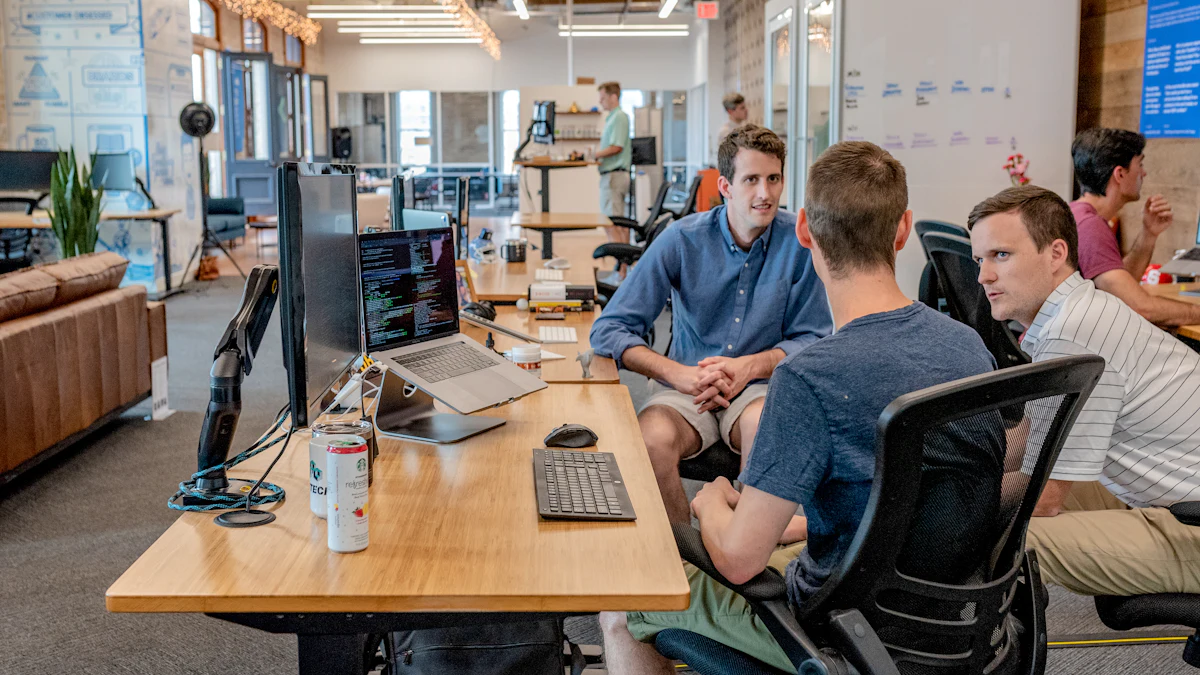
Choosing a web development company in Chennai comes down to two things: does the team pick technology that fits your business, and can they prove it with process, ownership and support terms? This guide gives you the checklist to compare vendors on those points instead of on portfolio screenshots.
Most Chennai businesses comparing vendors get the same pitch: a list of technologies, a few screenshots, a rough quote. What they rarely get is a straight answer on why a given stack was chosen, who owns the code, and what happens in month three after launch. Those three answers separate a partner from a supplier.
Below is what to ask, what to avoid, and how we scope projects at Digital Executive Partner.
What Chennai businesses actually need from a web partner
Requirements differ by company type, and a good vendor adapts the stack rather than selling one platform to everyone.
- Retail and D2C brands usually need an e-commerce build or a migration — Shopify, WooCommerce, Magento — plus payment gateways, shipping integrations and a product data workflow that does not break at scale.
- B2B and manufacturing firms typically need a corporate site, a product catalogue, multilingual pages, and integration with a CRM such as Zoho or HubSpot so enquiries land in the right pipeline.
- SaaS and internal teams need web apps, customer portals, APIs and dashboards, often with an existing backend they cannot replace.
- Service businesses need fast landing pages, clean SEO fundamentals and Core Web Vitals, because their site is a lead-generation asset, not a brochure.
Notice that none of these start with a technology. They start with a business process — orders, enquiries, bookings, data — and the technology follows.
Stack fit: how the choice is actually made
A credible web development company in Chennai will explain the trade-offs out loud. Here is how the main options compare.
| Option | Best for | Trade-offs |
|---|---|---|
| WordPress / WooCommerce | Content-heavy sites, blogs, small stores, tight budgets | Plugin maintenance, performance tuning needed |
| Headless CMS (Strapi, Sanity, Contentful, Payload) + Next.js | Multi-channel content, speed, long-term flexibility | Higher upfront build, needs dev involvement for changes |
| Shopify / Shopify Plus | D2C retail, fast launch, hosted infrastructure | Less control over checkout logic outside approved extensions |
| Custom build (React/Next.js + Node, Laravel, Django, .NET) | Portals, web apps, complex integrations | Highest cost, requires clear scope and ownership |
| Webflow | Marketing sites with design-heavy pages | Limited backend logic |
Three questions expose whether a vendor is choosing or defaulting:
- Why this platform for this project? A good answer references your content volume, team skills, integration needs and budget. A bad answer is "we only do X".
- What happens when we outgrow it? Ask about migration paths — for example WordPress to headless, or Magento to Shopify.
- Who maintains it after launch? If the answer is vague, the site will age badly.
We build with any mainstream technology — frontend frameworks like React, Next.js, Vue and Astro; backends in Node.js, Laravel, Django, Spring Boot or .NET; databases from PostgreSQL to MongoDB; hosting on AWS, Google Cloud, Azure, Vercel or Cloudflare. The point is not the list. The point is that the choice is made against your requirements, not our comfort zone. You can see the full scope of what we cover on our services page.
Questions to ask before you sign
Use this as a script in your next vendor call.
Process and communication
- Who is my single point of contact, and how often do I get updates?
- Will I see a staging environment before anything goes live?
- How do you handle scope changes — written change requests or informal chat?
- What does your QA process include: devices, browsers, accessibility, load testing?
Ownership and handover
- Do I own the code, domain, hosting account and third-party accounts?
- Will I get repository access and documentation at handover?
- Are there licence or subscription costs I will carry after launch?
- Can another team take over the project without your involvement?
Support after launch
- What is the warranty period for bugs?
- What are the response times and rates for ongoing support?
- Do you handle security patches and dependency updates?
- Who monitors uptime and backups?
If a vendor hesitates on ownership or handover, treat it as a serious signal. Locked-in hosting and withheld repositories are the most common way businesses end up paying twice for the same site.

Red flags worth walking away from
- Fixed templates sold as custom work. Ask to see the theme or starter repo. If every project looks the same, it is a template.
- No staging environment. Changes tested directly on a live site are how businesses lose a weekend of sales.
- No post-launch support plan. Every site needs updates, patches and monitoring. "We'll be around" is not a plan.
- No written scope. If the quote is a number without deliverables, the argument comes later.
- No performance targets. Ask for Lighthouse or Core Web Vitals targets in writing.
- AI that publishes without review. If a tool pushes AI-generated content or product data live without your approval, that is a risk, not a feature. Our approach is consistent across products: AI proposes, you approve.
Budget ranges and what drives cost
Exact figures vary by scope, so treat any vendor quoting a flat number without a brief with caution. What you can compare is what moves the price.
Cost drivers, roughly in order of impact:
- Custom logic — portals, dashboards, pricing engines, booking flows.
- Integrations — CRM, ERP, payment gateways, shipping, accounting. Each one adds build and testing time.
- Content migration — volume and messiness of existing data, redirects, SEO preservation.
- Design scope — a design system and multiple templates cost more than one well-built template.
- Multilingual and multi-region setups.
- Compliance and accessibility requirements.
What should cost less: standard corporate sites, landing pages, and builds on established platforms where the work is configuration rather than invention. If a vendor prices a five-page brochure site like a web app, ask for the breakdown.
A useful habit: ask for the estimate split into discovery, design, build, QA and launch support. Vendors who cannot break it down usually have not scoped it.
How we scope and deliver a project
Our process is deliberately plain, because most project failures are process failures.
- Discovery. We map your current systems, content, integrations and constraints, then recommend a stack with reasons attached.
- Written scope. Deliverables, timeline, assumptions and exclusions in one document you can hold us to.
- Design and build in stages. You review on staging, not on production.
- QA before launch. Devices, browsers, forms, payments, redirects, performance and SEO basics.
- Handover. Repository, accounts, documentation and a walkthrough.
- Support. Maintenance, monitoring, security updates and further development as needed.
We work as a full-service team across websites, e-commerce, mobile apps (Flutter, React Native, native iOS and Android), business systems like Zoho and Salesforce, and AI features such as chatbots and RAG over company documents. We also take over existing projects that have stalled or been abandoned — that work starts with an audit, not a rewrite.
If you are comparing vendors in Chennai, the fastest way to filter the list is to send the same brief to each and compare the questions they ask back. The team that asks about your integrations, content and handover expectations is usually the one worth shortlisting. To see how we would approach yours, look at our products and services overview or send us a message — we reply as soon as possible.
Related reading
Frequently asked questions
How do I choose a web development company in Chennai?
Compare vendors on four things: whether they explain why a stack fits your project, whether they show a written scope, whether you own the code and accounts, and what support they offer after launch. Portfolios matter less than those answers.
How much does a website cost in Chennai?
It depends on scope. Standard corporate sites and landing pages cost far less than custom web apps, portals or multi-integration e-commerce builds. Ask for an estimate split into discovery, design, build, QA and launch support so you can compare vendors fairly.
Which technology should my website be built on?
Match it to your needs: WordPress or Webflow for content sites, Shopify for D2C retail, headless CMS with Next.js for speed and multi-channel content, and custom frameworks for portals and web apps. The right answer depends on your content volume, integrations, team skills and budget.
Will I own the code and accounts after the project?
You should. Insist on repository access, domain and hosting ownership, and documentation at handover. If a vendor will not commit to that in writing, treat it as a red flag.
Can you take over a project another team started?
Yes. We regularly take over existing projects. It starts with an audit of the codebase, hosting and integrations, followed by a plan for stabilising and extending the work rather than automatically rewriting it.
Do you provide support after launch?
Yes. We offer maintenance and long-term support covering security patches, dependency updates, monitoring, backups and further development, with response times agreed upfront.
Comparing web development partners?
Send us your brief. We will tell you which stack fits, what it takes to build, and what happens after launch — in writing.