
Web Development Company in the USA: How to Choose
How to evaluate a web development company in the USA on stack fit, communication and long-term support — plus the questions that expose weak partners early.
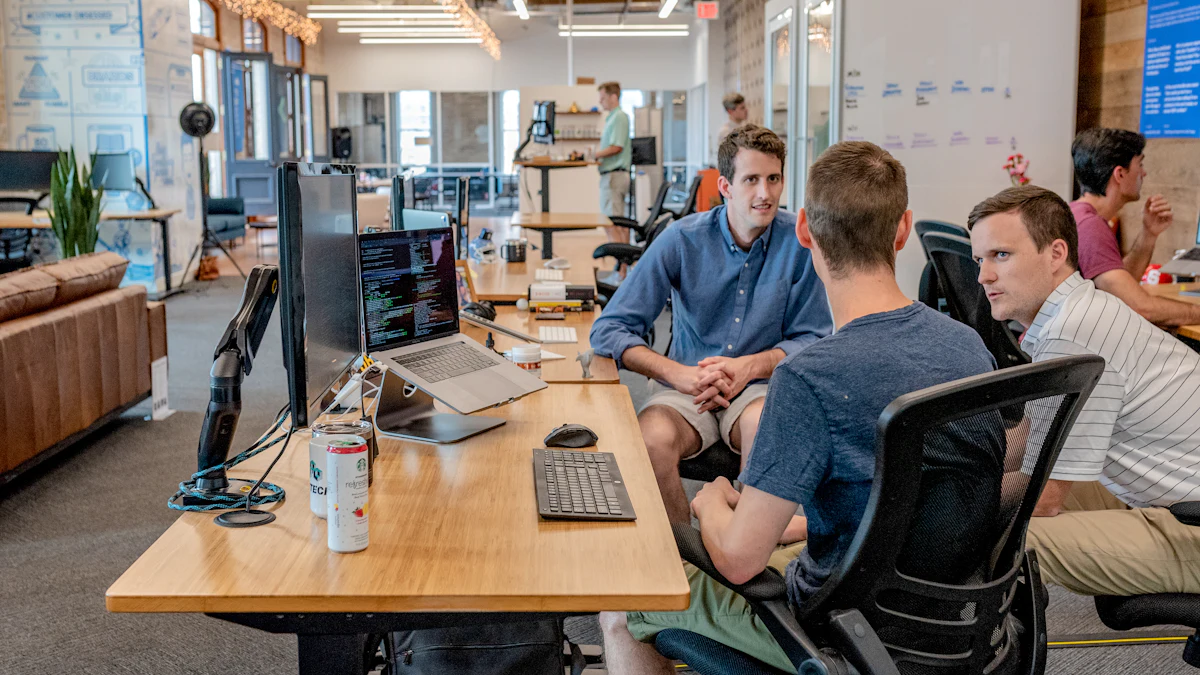
Choosing a web development company in the USA usually comes down to three things: whether they can build on the stack you already run, how they communicate when something breaks, and whether they will still be there in year three. Location matters far less than most buyers expect — a team one time zone away that answers in an hour beats a vendor down the street that goes quiet after launch.
This guide is written for the people who actually sign off on the work: Shopify merchants, ops managers and CTOs. It covers what to check before you shortlist, the questions that separate real partners from order-takers, and how we run projects for US clients.
What US buyers actually need from a web development company
Most projects we see are not greenfield. They are one of five things:
- A rebuild or redesign of a site that has outgrown its theme or CMS.
- A migration between platforms — WordPress to headless, Magento to Shopify, a legacy CMS to something maintainable.
- An integration: Shopify plus Zoho CRM, ERP plus a storefront, a payment or shipping gateway that never quite worked.
- A rescue: taking over a half-finished project or a codebase the previous agency abandoned.
- Ongoing support: fixes, performance work, security patches and small features on a predictable cadence.
Notice that none of these are solved by proximity. They are solved by a team that can read an existing codebase, work inside your constraints, and document what they changed. That is the real bar for a web development company in the USA — or anywhere else you hire.
The stack question comes first
Ask any candidate to name the technologies they would use for your project and why. A strong answer references your existing systems, not their favourite framework. If you run WooCommerce, a Laravel team is fine; if you are on Shopify Plus, you want someone comfortable with Liquid, Hydrogen and checkout extensions.
We build with mainstream technologies chosen to fit the client's needs, budget and existing systems — WordPress, headless CMS platforms, Shopify and Shopify Plus, React and Next.js, Node.js, Laravel, Django, .NET, Flutter and React Native, deployed on AWS, Google Cloud, Azure, Vercel or Cloudflare. The technology should follow the requirement, not the other way round.
Communication and time zones
A US-facing team should give you a named contact, a shared board or ticket queue you can see, and a stated response window. Ask what happens at 5pm on a Friday when checkout breaks. If the answer is "we'll get to it Monday", that is your answer.
Location vs capability: why the tech stack matters more than the ZIP code
Buyers often filter vendors by US location first. It is a reasonable proxy for communication and accountability, but it is a weak one. What you actually want is capability plus a working process.
| What you are screening for | Weak signal | Strong signal |
|---|---|---|
| Stack fit | "We build everything" with no examples | Names your platform and shows comparable builds |
| Ownership | Code lives on their hosting, no repo access | You own the repo, hosting and accounts from day one |
| Communication | One WhatsApp thread, no tickets | Shared board, named contact, stated response window |
| Support | "We'll quote each fix" | Retainer or maintenance plan with defined scope |
| Handover | No documentation | Written handover, credentials, environment notes |
Use the table as a scorecard. Two weak signals in a row is usually enough to move on.
What to ask about ownership
Before signing, confirm in writing that you own the source code, the domains, the cloud accounts, the Shopify or Zoho organisation, and every third-party subscription. Agencies that hold the keys have leverage you do not want to test.
What to ask about handover
Ask for the handover format: a repo, a README, environment variables, deployment steps and a walkthrough call. If a vendor cannot describe this before the project starts, they will not produce it at the end.
Questions to ask before you sign: process, ownership and support
Run this checklist in the first call. The answers tell you more than any portfolio page.
- Who is my day-to-day contact, and what is the response window?
- Which technologies will you use, and why those over the alternatives?
- How do you handle scope changes mid-project?
- Do I own the code, accounts and infrastructure?
- What does testing look like before launch — staging, QA, performance budgets?
- What happens after launch: warranty period, retainer, or ad-hoc quotes?
- Can you take over an existing codebase, and how do you audit it first?
- How do you handle data migration and rollback if something goes wrong?
If a vendor dodges questions 4 and 6, treat it as a structural problem, not a communication style.
Pricing models you will see
- Fixed price: good for well-specified, small scopes. Risky for anything with unknowns.
- Time and materials: flexible, but you carry the estimation risk.
- Retainer: predictable monthly capacity for support and improvements.
- Dedicated developers: a monthly rate for one or more engineers working only on your backlog.
We work across all four, and match the model to how much is actually known at the start. You can see the full scope of what we cover on our web and mobile development services page.

Red flags when comparing web development companies
- No staging environment. Everything is tested on production.
- No access to the repo until final payment.
- Estimates given before anyone has looked at your current system.
- "We'll figure out the integration later" on a project where the integration is the point.
- No named contact, only a sales address.
- Case studies with no technical detail — pretty screenshots, no stack, no problem statement.
- Refusal to work with your existing team or tools.
The AI question, asked properly
Many vendors now lead with AI. The useful question is not "do you use AI" but "where does a human approve the output". For content, product data, chatbots or agents, you want a review step before anything reaches customers. Our own products follow that rule: AI proposes, the customer approves, nothing publishes without review. Hold your web development partner to the same standard.
Migrations deserve their own plan
If you are moving platforms, ask for the migration sequence: what gets exported, what gets rebuilt, how URLs are redirected, how SEO is preserved, and when the DNS switch happens. A migration without a rollback plan is a gamble with your traffic.
How we work with US clients: process, time zones and pricing
We are a full-service software team working with growing businesses, including US clients across e-commerce, services and SaaS. Our process is deliberately plain:
- Scoping call. We look at your current stack, goals and constraints.
- Written plan. Scope, technologies, milestones, assumptions and what is out of scope.
- Build in visible increments. You see staging links, not status reports.
- Review and launch. QA, performance checks, redirects, monitoring.
- Support. Retainer, maintenance or dedicated developers, depending on what you need.
On timing: we agree on overlap hours up front so there is always a window for live calls, and asynchronous updates fill the rest. You get a named contact and a shared board, so progress is visible without chasing.
On pricing: we quote after scoping, not before. A landing page, a headless rebuild and a Shopify–Zoho integration are three different projects, and pretending otherwise wastes your time. If budget is the constraint, say so early — there is usually a phased version that ships value first.
Where we fit best
We are a good fit if you need a partner who can hold both the frontend and the business systems: a storefront plus CRM sync, a customer portal plus ERP data, a mobile app plus the API behind it. We are a poor fit if you want the cheapest possible page and nothing after it.
You can compare our products and services on the products page, or send us the details of your project and we will come back with a plan.
Next step: scope your project and get a plan
Write down four things before you talk to any web development company in the USA: what you have now, what is broken, what success looks like in six months, and your budget range. That one page will get you a far more useful proposal than a vague enquiry, and it makes vendors compete on substance instead of slides.
Then ask the eight questions above, check ownership and support in writing, and pick the team that can explain your own system back to you.
Related reading
Frequently asked questions
Do I need a web development company located in the USA?
Not necessarily. What matters is stack fit, a named contact, an agreed response window and clear ownership of code and accounts. A US-facing team with overlapping hours and a visible ticket queue often works better than a local vendor with no process.
How much does a website or web app project cost?
It depends on scope. A landing page, a headless CMS rebuild, a Shopify migration and a custom web app are different projects with different effort. We quote after a scoping call so the estimate reflects your actual systems and requirements rather than a generic package.
Can you take over a project another agency started?
Yes. We audit the existing codebase, document what is there, and agree on a stabilisation plan before adding features. Taking over existing projects and providing long-term maintenance is a normal part of our work.
Which platforms and technologies do you work with?
We build with mainstream technologies chosen to fit the client's needs, budget and existing systems: WordPress and headless CMS platforms, Shopify and Shopify Plus, React, Next.js, Vue, Node.js, Laravel, Django, .NET, Flutter and React Native, plus AWS, Google Cloud, Azure, Vercel and Cloudflare for hosting and DevOps.
How do you handle migrations without losing SEO?
We plan the migration sequence in advance: what is exported, what is rebuilt, how URLs are redirected, how metadata and structured data carry over, and when DNS switches. A rollback path is agreed before launch.
Do you offer ongoing support after launch?
Yes. Options include a maintenance retainer, ad-hoc fixes, or dedicated developers working on your backlog. The right model depends on how much change you expect each month.
Ready to scope your project?
Tell us what you have now, what is broken and what success looks like in six months. We will come back with a written plan, the technologies we would use and a clear next step.