
Web Development Company in Houston: How to Choose
Looking for a web development company in Houston? Compare local agencies vs remote studios on cost, speed and stack fit — plus the questions to ask before you sign.
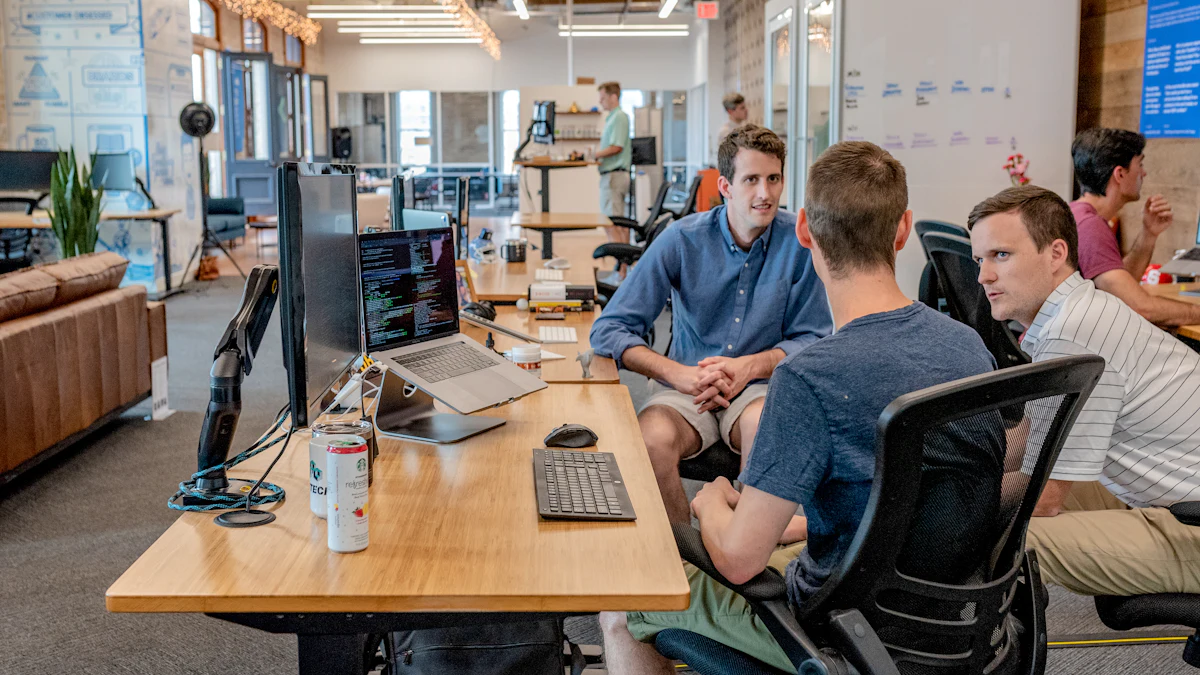
Hiring a web development company in Houston comes down to two things: can they ship what you need, and will you still own it when they're done. Everything else — office location, agency size, awards — is secondary. This guide covers what Houston businesses actually need in 2026, how local agencies compare with remote-first studios on cost and speed, and the exact questions to ask before you sign anything.
We're Digital Executive Partner, a full-service software team. We build with any mainstream technology, chosen to fit your needs, budget and existing systems. We're not limited to one stack, and we're not limited to one city — which matters more than it used to.
What Houston businesses actually need from a web partner in 2026
Most Houston projects we see fall into a handful of buckets:
- Corporate and marketing sites on WordPress, Webflow or a headless CMS (Strapi, Sanity, Contentful, Payload, Directus, Ghost), with SEO and Core Web Vitals handled properly.
- E-commerce on Shopify, Shopify Plus, WooCommerce, Magento / Adobe Commerce, BigCommerce or a custom store, with payment gateways and marketplace integrations.
- Web apps and customer portals built on React, Next.js, Vue, Nuxt, Angular, SvelteKit or Astro on the frontend, with Node.js, Laravel, Django, FastAPI, Spring Boot or .NET on the backend.
- Mobile apps in Flutter, React Native, native iOS (Swift/SwiftUI) or native Android (Kotlin/Jetpack Compose), plus PWAs and App Store / Google Play publishing.
- Integrations and business systems: Zoho (CRM, Creator, Books, Inventory, Desk, Projects, Bookings), Salesforce, HubSpot, Odoo, SAP/ERP, Google Workspace, Microsoft 365, Stripe, PayPal, plus Zapier/Make/n8n automations.
- AI features: chatbots and AI agents on OpenAI, Anthropic Claude, Google Gemini, DeepSeek or open-source models, RAG over company documents, and AI inside existing apps.
A partner who can only do one of these will either stretch to cover the rest or hand you off. Ask early which of these they've shipped before — and ask for the repos or live URLs.
The stack question is a budget question
If a team only builds in one framework, your project gets shaped to fit that framework. Sometimes that's fine. Often it means paying for a rewrite later. A stack-agnostic partner picks the technology that fits your existing systems, your team's skills and your budget — not the one they happen to know best.
Local agency vs remote studio: cost, speed and stack fit
Here's an honest comparison. Neither column is automatically better; it depends on your project.
| Factor | Local Houston agency | Remote-first studio |
|---|---|---|
| Cost | Higher overhead, often 20–40% more for the same scope | Lower overhead, budget goes further into build time |
| Speed | In-person workshops can speed up discovery | Async by default, weekly demos keep momentum |
| Stack fit | Often specialised in 1–2 platforms | Stack-agnostic, chosen per project |
| Communication | Meetings, in-person reviews | Video calls, shared boards, written updates |
| Timezone | Same as yours | Overlap hours agreed upfront |
| Handover | Varies; some hold the keys | You own the code and accounts |
If your project needs frequent in-person workshops — say, a complex ERP rollout with multiple stakeholders — a local team can be worth the premium. If your project is a website, store, app or integration with a clear scope, a remote studio usually ships faster and cheaper.
What "remote" should not mean
Remote should never mean "you can't reach us." Insist on:
- A named point of contact, not a ticket queue.
- A weekly demo of working software, not status slides.
- Access to a shared board where you can see what's in progress.
- A written scope with milestones and acceptance criteria.
Questions to ask before you sign
Bring this list to every call. The answers tell you more than any portfolio page.
- Who owns the code and accounts? You should own the repository, the domain, the hosting, the CMS and every third-party account. Get this in writing.
- What happens at handover? Ask for documentation, a walkthrough recording and a defined support window after launch.
- Can I see a project you shipped in the last 12 months? Recent, live, and ideally in your industry.
- Who actually writes the code? Some agencies sell, then subcontract. Ask who's on the team and whether they're employees or contractors.
- How do you handle scope changes? A clear change-request process beats a vague "we'll figure it out."
- What's your post-launch support model? Maintenance, monitoring, backups and security updates should be spelled out.
- Which platforms do you recommend for my case, and why? If the answer is always the same platform, that's a signal.
- What does a typical week look like? You want demos, not silence.
A quick checklist
- Written scope with milestones
- Fixed price or a clear rate card
- You own code, domains, hosting and accounts
- Weekly demos scheduled
- Handover docs and a support window agreed
- Named contact and escalation path

Red flags: lock-in, vague timelines, no post-launch support
Watch for these:
- Proprietary lock-in. If you can't take the code and run it elsewhere, you're renting, not buying.
- No timeline, or a timeline with no milestones. "About three months" is not a plan.
- No post-launch support. Launch day is the start of the relationship, not the end.
- No staging environment. You should review changes before they go live.
- Vague ownership answers. If the answer to "who owns the code?" takes more than one sentence, keep asking.
- No security or backup plan. Especially for stores and portals handling customer data.
How we work: fixed scope, weekly demos, you own the code
We run projects the same way whether you're in Houston, elsewhere in Texas or another country:
- Scoping call. We map what you need, your existing systems and your budget.
- Written scope and estimate. Milestones, deliverables, acceptance criteria, price.
- Build in weekly sprints. You see working software every week — not a slide deck.
- Review and approval gates. For anything AI-assisted, AI proposes and you approve. Nothing is published without your review.
- Launch and handover. You get the code, the accounts, the documentation and a walkthrough.
- Ongoing support. Maintenance, monitoring, backups, security updates and new features as you grow.
We handle new builds, redesigns, migrations between platforms (WordPress → headless, Magento → Shopify), integrations, performance and security fixes, taking over existing projects, and long-term support. If you already have a team, we can work alongside them or provide dedicated developers.
You can see the full range of what we build on our services page, and compare our ready-made products — ZohoSync, Lookfit AI, SEO Products by EP Digital, Zoho Middleware and Brand Studio — on the products page.
Next step: get a scoped estimate in 48 hours
Send us your requirements, existing links and any constraints. We'll reply as soon as possible with a scoped estimate and a proposed milestone plan — no obligation, no sales pressure. If your project isn't a fit, we'll tell you that too.
Email digitalexecutivepartner@gmail.com or use the contact form. If you'd rather talk first, tell us a time that works and we'll set up a call.
Related reading
Frequently asked questions
Do I need a Houston-based web development company, or can I hire remotely?
For most websites, stores, apps and integrations, a remote-first studio works well and often costs less. Local agencies make sense when your project needs frequent in-person workshops with multiple stakeholders. Either way, insist on a named contact, weekly demos and full ownership of the code and accounts.
How much does web development cost in Houston?
It depends entirely on scope — a marketing site, a Shopify store, a custom web app and a multi-platform integration are very different projects. The honest answer is to get a written scope with milestones and a fixed price or clear rate card before you commit. We provide a scoped estimate after a short requirements call.
Who owns the code and accounts after the project?
You should. That means the repository, domain, hosting, CMS and every third-party account. Get it in writing before you sign. We hand over code, accounts, documentation and a walkthrough recording at launch.
Can you take over an existing project another agency started?
Yes. We regularly take over existing projects, fix performance and security issues, and continue development. We'll review the current codebase and systems first, then propose a plan.
Which platforms and technologies do you build with?
Any mainstream technology that fits your needs, budget and existing systems — WordPress, Shopify, headless CMS platforms, React, Next.js, Vue, Node.js, Laravel, Django, Flutter, React Native, native iOS and Android, plus Zoho, Salesforce, HubSpot and other business systems. We're stack-agnostic.
Do you offer support after launch?
Yes. We offer maintenance and long-term support covering monitoring, backups, security updates and new features. Support terms are agreed before launch, not after.
Get a scoped estimate for your project
Send your requirements, existing links and constraints. We'll reply as soon as possible with a written scope, milestones and a price — no obligation.