
Web Development Company in Jaipur: How to Choose
A practical guide for Jaipur businesses comparing web development companies: portfolio checks, stack questions, red flags and how to compare quotes fairly.
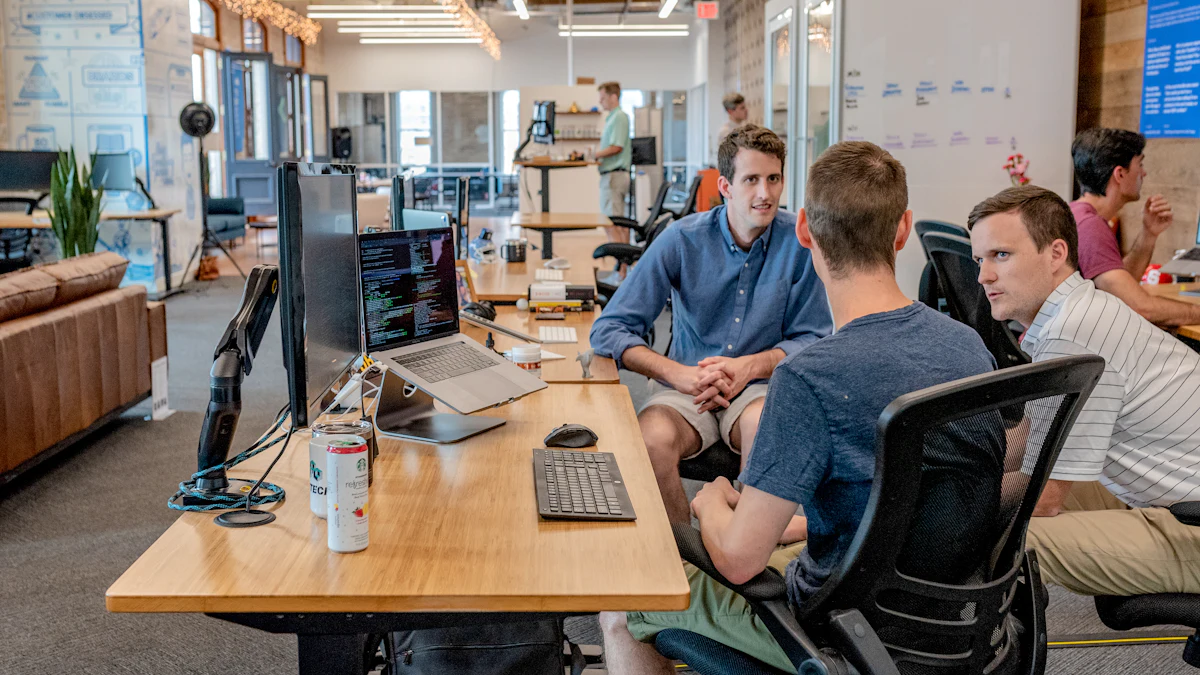
Choosing a web development company in Jaipur comes down to one test: can they show you real builds they engineered, and can they explain how you will own and maintain them? Everything else — the office address, the sales deck, the number of logos on the homepage — is secondary. This guide gives you a practical framework for vetting local firms and comparing quotes without getting burned.
What Jaipur businesses actually need from a web partner
Most Jaipur companies are not buying a brochure. They are buying one of four things:
- A site that ranks and converts — fast, mobile-first, clean technical SEO, not a slider-heavy template.
- A store that handles real volume — Shopify or WooCommerce with working payments, shipping and inventory logic.
- An internal tool or portal — dealer portals, booking systems, dashboards, CRM integrations.
- A partner who stays — someone to fix, extend and host the thing after launch.
Be explicit about which of these you need before you shortlist anyone. A firm that is excellent at D2C Shopify stores may be the wrong choice for a Zoho-integrated dealer portal, and vice versa.
Portfolio checks: real builds vs template reskins
Every agency shows a portfolio. Fewer can survive ten minutes of scrutiny. Run these checks on the three sites you like most:
1. Open the source
Right-click, view page source, and look for the theme or builder signature. A WordPress site running a premium theme with a page builder is fine for a brochure site — but ask what was customised. If the answer is "colours and logo", you are buying a reskin, not development.
2. Run a performance test
Put two or three portfolio URLs into PageSpeed Insights. Look at mobile Core Web Vitals, not the desktop score. If their own showcase sites score poorly on mobile, your site will too.
3. Check the boring pages
Look at a 404 page, a contact form, and the footer. Real builds have real detail there. Template installs often leave default text, broken links or a stock 404.
4. Ask what was hard
"Which part of this build was technically difficult?" A genuine engineering team will name a specific problem — a payment gateway, a data migration, a performance bottleneck. A template shop will describe the design.
Questions to ask about stack, hosting and ownership
This is where most Jaipur buyers lose money. Ask these questions in writing and keep the answers.
| Question | Good answer | Warning sign |
|---|---|---|
| What stack will you use, and why? | A named stack matched to your needs (e.g. Next.js front end, Laravel API, Shopify for commerce) | "Whatever you want" with no reasoning |
| Who owns the code and accounts? | You do — repo, domain, hosting, CMS | "We'll manage everything for you" with no access |
| Where will it be hosted? | Named provider with a plan for backups and monitoring | Unnamed shared hosting, no backup policy |
| How do we get the code if we leave? | Full repository handover, documented | Silence, or "that's not usually needed" |
| Who handles updates and security? | A named maintenance arrangement with response times | "We'll fix it if something breaks" |
The ownership question matters most. If your domain, hosting, CMS and repository are in the agency's name, you do not control your own website. Insist on accounts in your company's name from day one.
A good partner will also tell you which technologies they will not use for your case, and why. We build across mainstream stacks — from WordPress and Shopify to React, Laravel, Flutter and Zoho — but the choice should always be justified by your budget, team and existing systems, not by what the agency finds easiest. You can see how we scope this on our web and mobile development service page.
Red flags in pricing and scope
Watch for these patterns when comparing proposals:
- A price with no scope document. If the quote is one line, the scope is whatever they decide later.
- Unlimited revisions. It sounds generous; in practice it means no agreed definition of done.
- No mention of content, SEO or migration. A redesign that ignores existing URLs will cost you traffic.
- Third-party dependency you cannot see. Custom plugins, page builders or a proprietary CMS that only they can maintain.
- No staging environment. Anything published straight to live is a risk.
- Payment terms that front-load everything. Large upfront payments with no milestone delivery reduce your leverage.
- No named people. Ask who will actually write the code and whether they are in-house or subcontracted.
None of these is automatically disqualifying, but two or three together should end the conversation.

How to compare quotes fairly
Quotes for "a website" are rarely comparable. Normalise them before you decide:
- Write your own one-page scope. List pages, features, integrations, content responsibilities and launch date. Send the same document to every firm.
- Ask for a line-item breakdown. Design, front-end, back-end, integrations, QA, content migration, launch and post-launch support as separate lines.
- Separate one-off from recurring. Build cost, hosting, maintenance, licences and third-party fees are different budgets.
- Ask what is excluded. The exclusions list tells you more than the inclusions.
- Score, don't gut-feel. Rate each proposal on scope clarity, stack fit, ownership terms, timeline realism and support. A cheaper quote with unclear ownership is the expensive option.
For a useful sanity check, ask each firm to walk you through a project that went wrong and how they handled it. The answer reveals more about working with them than any case study.
Handover, maintenance and long-term support
Launch day is the start of the relationship, not the end. Before you sign, agree on:
- Documentation — how to edit content, add products, manage users.
- Access handover — domain, hosting, CMS admin, repository, analytics, payment accounts.
- A support window — a defined period after launch for bug fixes at no extra cost.
- A maintenance plan — updates, backups, monitoring, security patches, and a response time.
- A growth path — what the next phase looks like if traffic or order volume doubles.
If a firm cannot describe its handover process in a paragraph, it does not have one.
Where AI fits into a modern build
Increasingly, Jaipur businesses ask for AI features — a support chatbot, product recommendations, or automation between their store and CRM. Treat these like any other integration: ask which model or platform is used, where the data lives, what it costs per month, and who reviews the output. A sensible rule is that AI proposes and a human approves; nothing should publish or message customers without review. If a firm cannot explain that boundary, be cautious.
A short checklist before you sign
- Portfolio sites pass a mobile performance test.
- Stack is named and justified for your case.
- Domain, hosting, CMS and repository are in your name.
- Scope, exclusions and timeline are in writing.
- Staging environment and QA process are defined.
- Handover, documentation and support terms are agreed.
- You know the recurring monthly cost, not just the build price.
Work through that list with two or three shortlisted firms and the decision usually makes itself. If you want a second opinion on a scope or a quote, our team is happy to review it — see our products and services or get in touch directly.
Related reading
Frequently asked questions
How much does a website cost from a web development company in Jaipur?
It depends entirely on scope. A brochure site, a Shopify store and a custom portal are three different projects with different engineering hours. Ask for a line-item quote against a written scope so you can compare firms fairly, and separate one-off build costs from recurring hosting, maintenance and licence fees.
Should I choose a Jaipur agency or a remote team?
Location matters less than process. A local firm is easier for in-person meetings; a remote team may offer deeper specialisation. What matters either way is a written scope, named developers, code ownership in your name and a defined handover and support plan.
Who should own the website code and hosting accounts?
You should. The domain, hosting, CMS admin, repository and analytics accounts should be registered to your company from day one. If they sit in the agency's name, you lose leverage and may have to rebuild if the relationship ends.
What red flags should I watch for in a proposal?
One-line quotes with no scope, unlimited revisions with no definition of done, no staging environment, no mention of content or URL migration, proprietary systems only the agency can maintain, and large upfront payments without milestones. Two or three of these together is a strong signal to walk away.
What happens after the website launches?
Agree this before signing: documentation, full access handover, a post-launch bug-fix window, and a maintenance plan covering updates, backups, monitoring and security patches with a stated response time. Also agree what the next phase looks like if traffic or orders grow.
Comparing web development quotes?
Send us your scope or a proposal you have received. We will tell you what is missing, what is overpriced and what to ask before you sign.